Showing posts with label peptides. Show all posts

Friday, December 4, 2020

Just came out ...

«A molecular dynamics simulation study on the propensity of Asn-Gly-containing heptapeptides towards β-turn structures: Comparison with ab initio quantum mechanical calculations.»


Friday, February 14, 2020

New node added to the cluster

A new fat node has been added to the cluster. This is based on an Intel i9-9900K, an RTX2070S, 8GB DDR4@3000 MHz, and a 2TB disk.


Initial tests confirmed that this is our new fastest machine, delivering ~575 ns/day on the standard 10,000 atom/4fs benchmark. As with the other i9, with smaller systems the performance flattens at approximately ~700ns/day with a 2.5fs step.


Monday, December 30, 2019

Illustrating transitions between conformers using circos plots


A new tutorial  is available for preparing a circos plot illustrating the transitions between stable conformers identified from e.g. a folding molecular dynamics simulation.


Friday, June 14, 2019

Short‐range periodicities paper.


Just came out : "On the presence of short‐range periodicities in protein structures that are not related to established secondary structure elements", https://doi.org/10.1002/prot.25758


Saturday, March 23, 2019

OpenDX rendering of folding landscapes


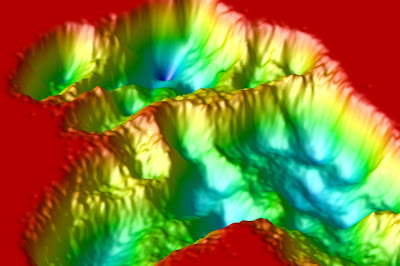
Folding landscape (from dPCA) of the M2TM peptide in TFE, rendered with OpenDX. Too much red probably.


Saturday, February 16, 2019

New fat box arrived


A new fat node has been added to the cluster. This is based on an Intel i9-9900K, a GTX-1080, 8GB DDR4@3000 MHz, and a two-disk RAID 0 @ 4TB.


Initial tests confirmed that this is indeed our new fastest machine, delivering ~560 ns/day on the standard 10,000 atom benchmark (second best is this one with 460 ns/day). With smaller systems, however, the performance flattens (giving with the CLN025 system 570 ns/day@2fs, ~730 ns/day@2.5fs).


Friday, February 8, 2019

Monday, January 14, 2019

αLa : add 15SB to the family


The same image as before, after adding results from the 15SB force field :


A definite improvement over both 12SB and 14SB.


Saturday, November 3, 2018

gp41 paper


Just came out : "Folding Molecular Dynamics Simulation of a gp41-Derived Peptide Reconcile Divergent Structure Determinations", ACS Omega, 3, 14746-14754 :


Saturday, December 23, 2017


Just came out :

«Folding Simulations of a Nuclear Receptor Box-Containing Peptide Demonstrate the Structural Persistence of the LxxLL Motif Even in the Absence of Its Cognate Receptor»


Tuesday, November 28, 2017

Amber 14SB vs 99SB-STAR-ILDN [2]


Have been looking for a mostly disordered peptide (with NMR data available) for which the two force fields would demonstrate detectably different secondary structure preferences. I think I found one :


The upper graph is from 99SB-STAR-ILDN, the lower from 14SB. The two simulations were 24 μs each, both using adaptive tempering (280K-380K). Comparison between observed and calculated  NOEs plus chemical shifts should suffice. Given that this is a mostly disordered peptide ,we should probably also compare the computationally expected vs experimentally observed number of NOEs.


Wednesday, September 27, 2017

Amber 14SB vs 99SB-STAR-ILDN : αLa peptide


Weblogo representations of secondary structure preferences for human α-Lactalbumin 101-111 peptide with the AMBER ff14SB plus a whole lot of other AMBER force fields. The 14SB simulation was 3 μs, all other 2 μs.


On the way from 12SB to 14SB the α-helical preference was significantly reduced, but the mainly 3₁₀-helical nature of this peptide can not be faithfully reproduced. At least for the time, AMBER99SB-STAR-ILDN still looks like the best force field for this peptide.


Friday, September 22, 2017

Amber99SB-STAR-ILDN : tri-alanine


Added one extra diagram to Figure 3 of this paper. This is a 2.6 μs simulation with a 4 fs timestep (HMR). Nearly identical with AMBER 14SB (?).


Sunday, December 25, 2016

New fat compute node arrived


New fat compute node arrived. It contains an i7-6800K@3.4GHz, an nvidia GTX-1070, 16 GBytes of physical memory and two WD Red 1TB disks. After a few problems with setting-up the disks as RAID0 (using Intel's rapid storage), a minimal CentOS 7.3 was installed and the nvidia drivers compiled and installed.


First tests with NAMD 2.12 were impressive : on a small peptide problem with 4400 atoms, the new box delivered ~330 nanoseconds per day, a speed-up by a factor of 10 compared with NAMD 2.9 running on a node containing an 8-core AMD FX-8150 plus a GTX 570. To make the comparison hardware-dependent-only, we should test with NAMD 2.9 on the new box (testing new NAMD on the old box won't do because support for fermi GPUs was dropped with NAMD 2.12).

On the same peptide system (4300 atoms) and with a 2.5 fs time step, 470 ns/day were recorded. This reached an outstanding 550 ns/day for a smaller (3300 atoms) system. Think about it again : more than 1 μs in two days. Two days.

Update : It seems that with this hardware and NAMD 2.12 it is necessary to disable off-loading FFT to the GPU by using the 'usePMECUDA no' configuration option.


Saturday, September 21, 2013

Force-field dependent secondary structure preferences


Weblogo representations of the per-residue secondary structure preferences (as produced by STRIDE) for folding simulations of the α-Lactalbumin-derived peptide studied in this paper. Results from seven force fields are shown. The experimental NMR results indicate a mostly 310-helical N-terminal part (residues 3-6) with an occupancy of ~50%, and a completely disordered C-terminus. The symbols in the weblogo diagrams are G => 310 helix, H => α helix, T => turn, C => random coil, E => extended. The force fields are CHARMM22, OPLSaa, AMBER ff12SB, AMBER ff99SB, and three variants of AMBER ff99SB (99SB-ILDN-NMR, 99SB-ILDN, 99SB-STAR-ILDN). It does look like a clear take-home message is present in these diagrams...


Monday, December 17, 2012

Adaptive tempering & folding simulations


Playing with adaptive tempering using a very short (200 ns) folding simulation of the CLN025 decapeptide. Interesting diagrams, see this Norma page ...

Saturday, January 7, 2012

Folding to atomistic detail with molecular dynamics simulations


Comparison between the experimental (X-ray) structure of a 14-mer peptide (upper panel), and the structure derived from a folding simulation (lower panel) using the AMBER99SB-ILDN force field and starting from the fully extended (unfolded) structure. This is impressive ... :-)


... and a direct comparison using anaglyph stereo (red-cyan glasses required) :